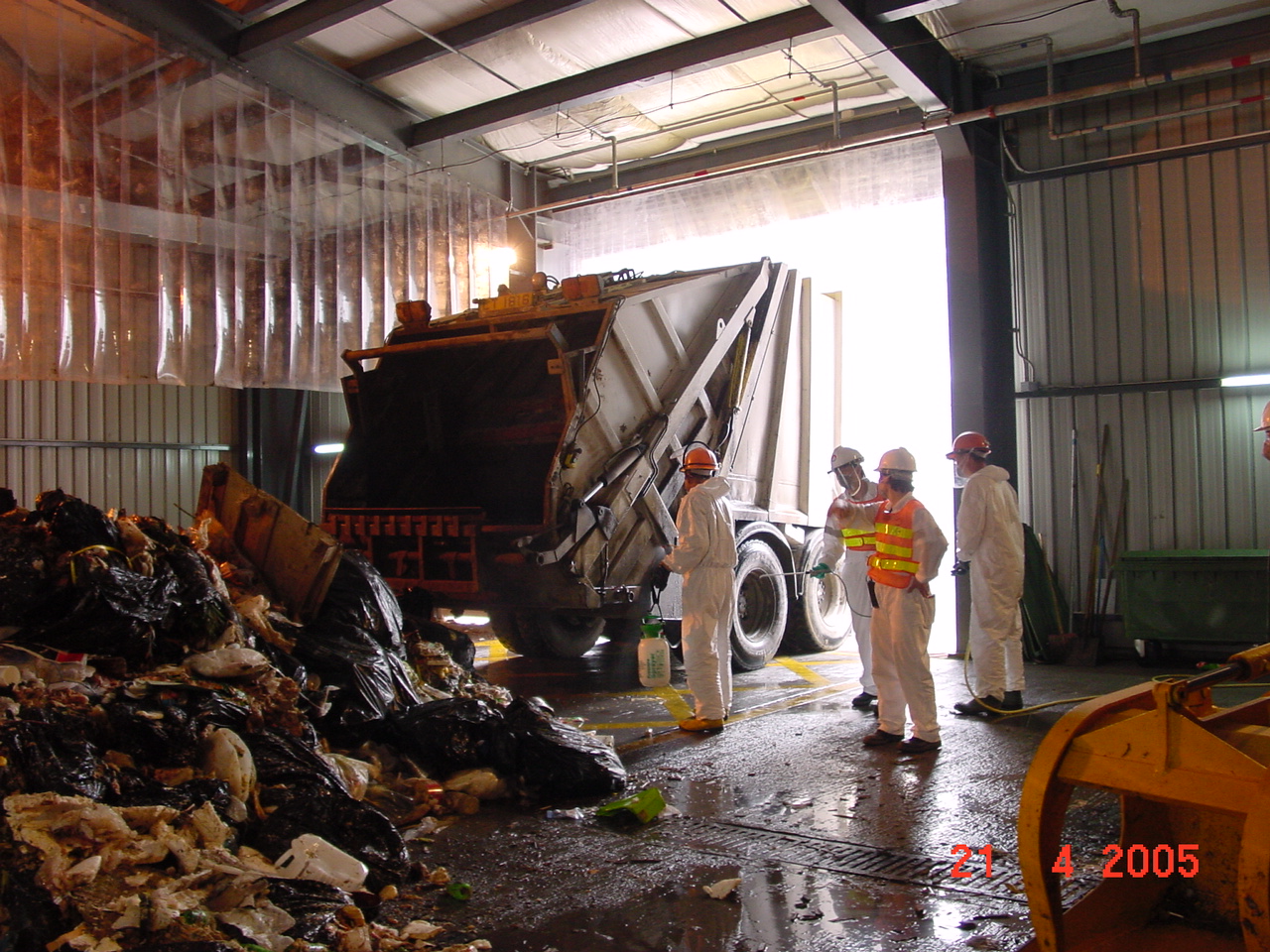
The opportunities for landfilling as a disposal method for municipal solid waste (MSW) are rapidly declining with depleting available cheap land resources and the wasteful nature of disposing useful resources in the landfill operation. The costs of landfilling in terms of site acquisition, preparation and maintenance are extremely significant.
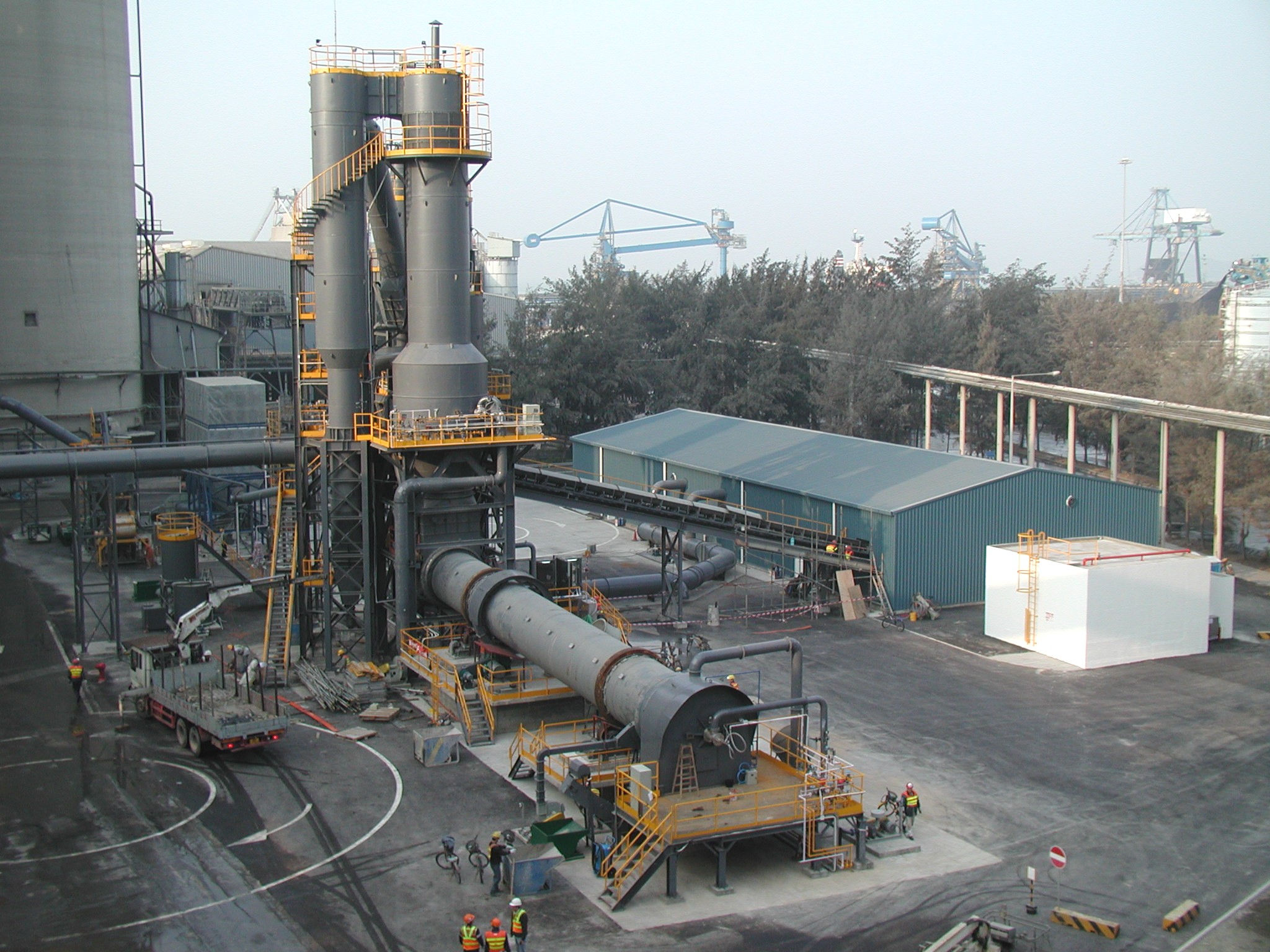
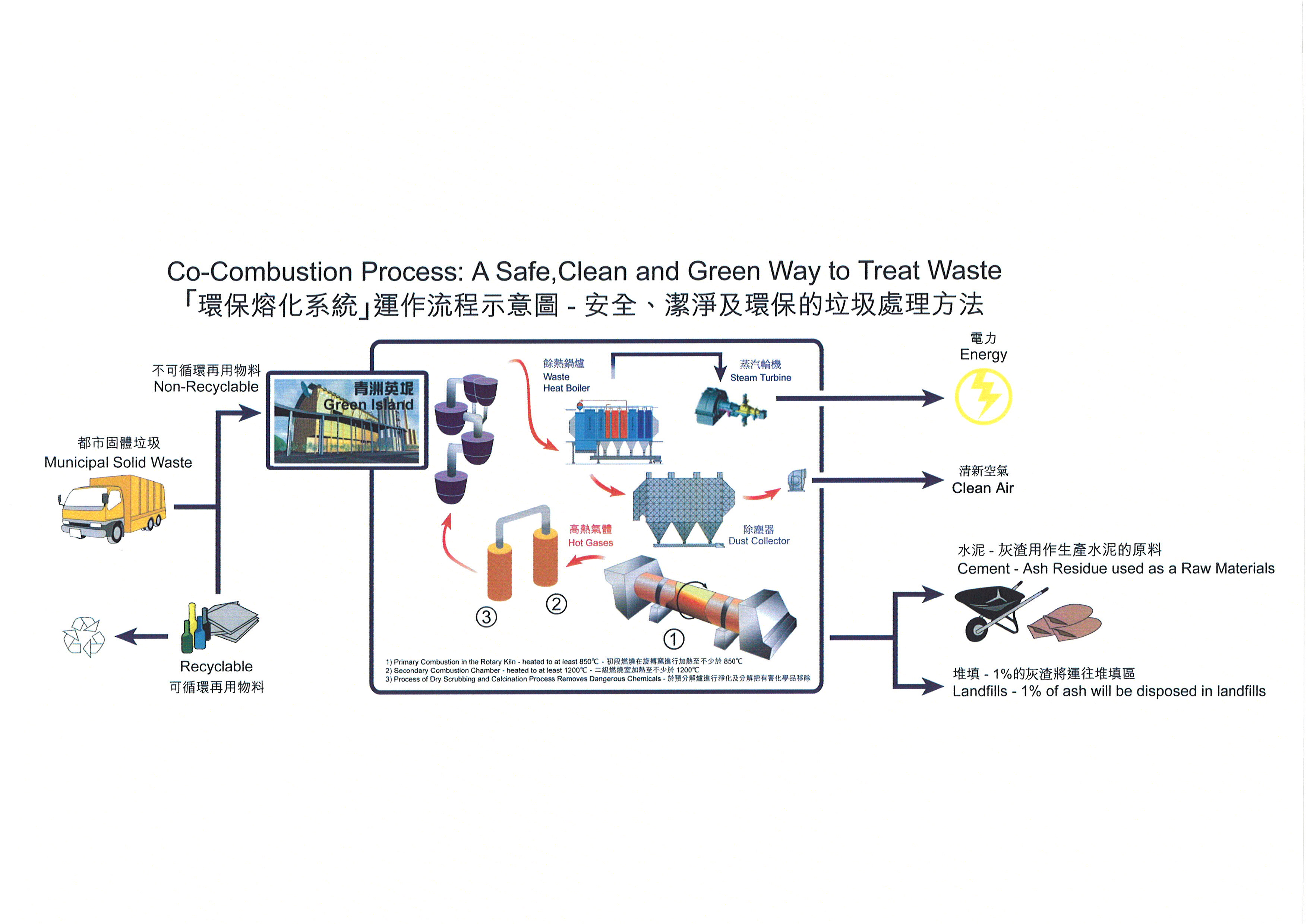
The patented design of an integrated process for cement production incorporating municipal solid waste (MSW) separation and combustion has been developed. The novel co-combustion (“CoCo”) design offers significant opportunities for waste minimisation in terms waste-to-energy, waste-to-cement, acid gas treatment and emissions minimisation. The “CoCo” MSW combustion system design incorporates the use of very high temperature, high turbulence and high combustion residence time are achieved. This results in very high burnout of MSW resulting in negligible particulate organic residual matter to form dioxin by de-novo synthesis. The energy produced is used for the cement process calcination of limestone and residual heat is converted into energy to drive the cement plant. The calcinations process itself, is used as a large scrubber to remove SOx and HCl, the removal of the latter also minimising the chance for dioxin formation further. A front end materials recovery and recycling facility (MRRF) is used to remove valuable recyclable components, chlorine based plastics and metal containing materials - such as batteries. The combustion of the MSW achieves a 85-90% volume reduction and finally the MSW ash is used as a feedstock for the production of the cement clinker.


